Next Day Journal↗
← Back to the news
Tecnología / EN / Source country: US

NASA Enhances Spacecraft Safety with Advanced Shock and Vibration Simulation

A new digital tool is helping NASA engineers improve the reliability of rockets and spacecraft by simulating extreme conditions during testing.

Source published 2026-10-19 · Next Day Journal Technology & business · 1 min read

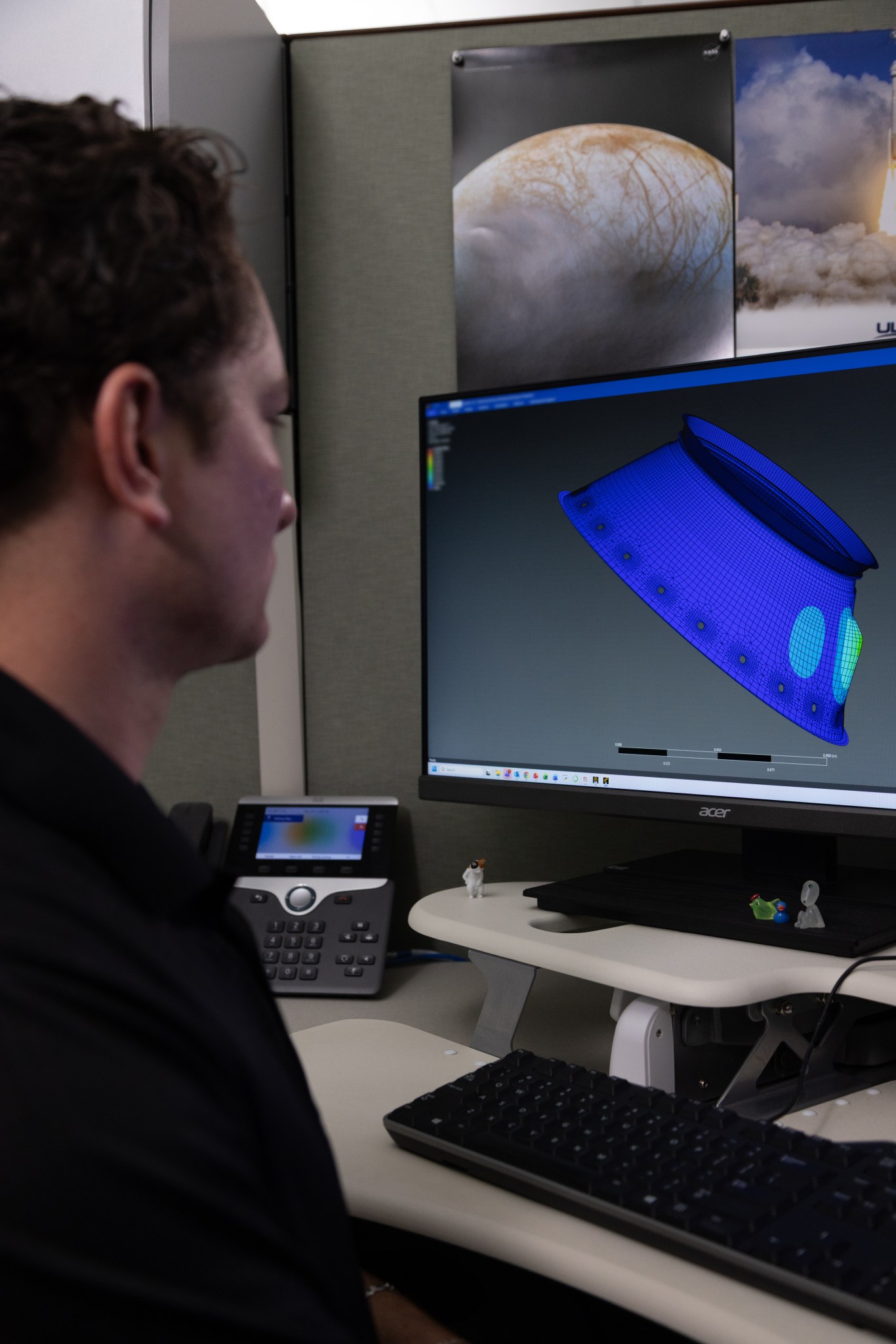
A person sits at a workstation viewing a computer monitor that displays a blue 3D wireframe engineering model of a spacecraft component.
Stirling Allen, part of the Dynamic Environments Group with NASA’s Launch Services Program Office, showcases a commercial digital software at NASA’s Kennedy Space Center in Florida. The software performs finite element modeling to support shock and vibration analysis and ensure spacecraft and rockets can withstand harsh vibration, shock, stress, or other physical forces before launch, strengthening mission safety in the process. NASA/Clayton Rougelot · NASA media usage guidelines — editorial reuse · Photo source

NASA engineers at Kennedy Space Center are leveraging a new digital tool to enhance spacecraft and rocket safety by simulating extreme conditions. This advancement allows for more accurate predictions of how vehicles will behave under stress, reducing the risk of failure during critical phases of flight.

The software utilizes finite element modeling to support shock and vibration analysis, ensuring spacecraft and rockets can withstand the harsh environments they will encounter. This method enables engineers to evaluate structural integrity without the need for extensive physical testing, saving time and resources.

The Dynamic Environments Group identified the necessity for shock testing and employed a template they developed to conduct what-if comparisons. This approach allows for visualizing structural behavior and answering complex questions that previously required extensive manual modeling.

Finite element analysis is a powerful simulation technique that breaks a complex structure into smaller components, enabling computers to process and analyze data efficiently. This method provides detailed insights into how materials and designs respond to dynamic forces, which is crucial for mission success.

Read the source

NASA Improves Shock, Vibration Analysis ↗

NASA. U.S. government source. Synthesis by Next Day Journal. The original agency has not reviewed this text. Based on the linked primary source.

Published on Next Day Journal 2026-10-20.