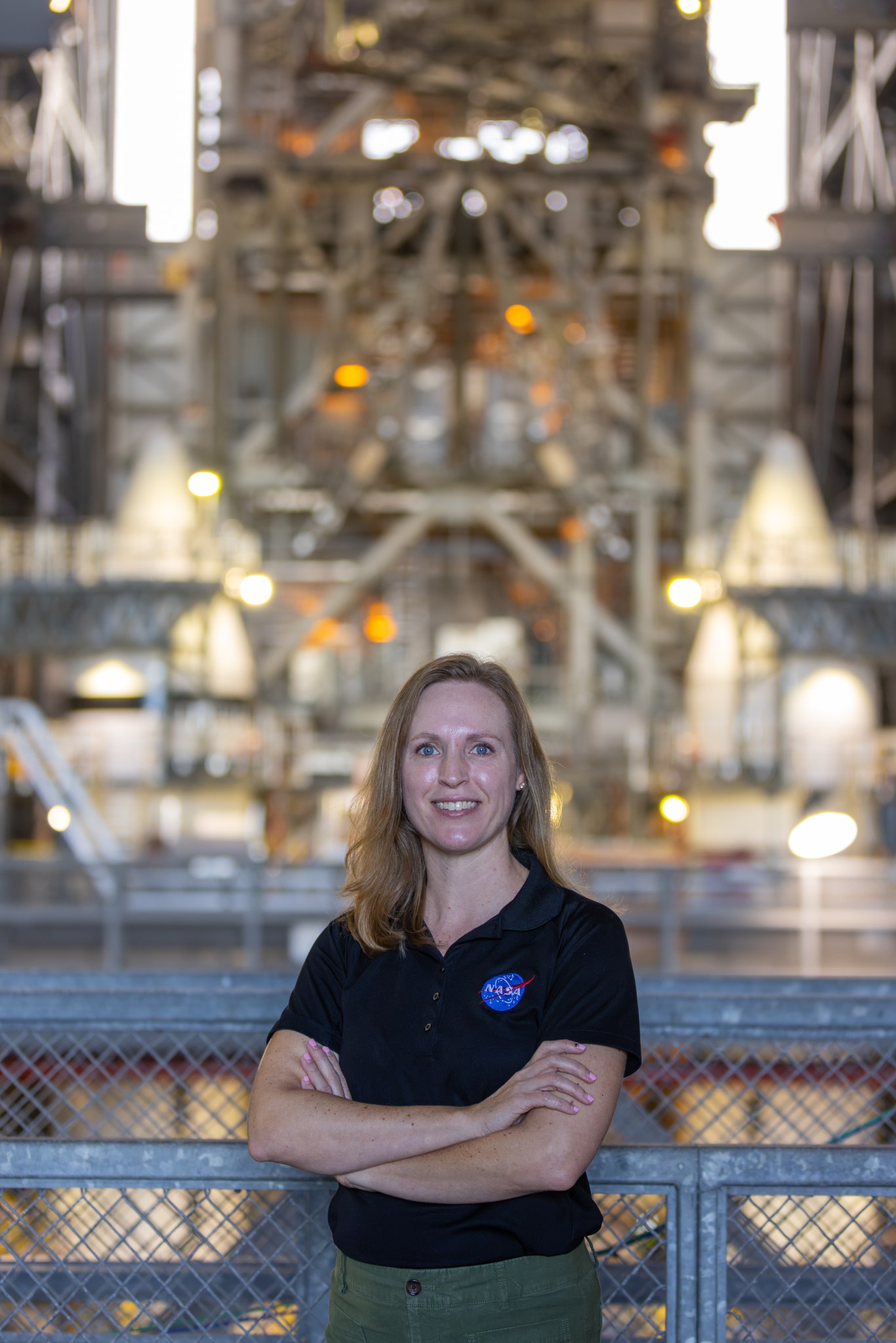
Allison Mjoen, NASA’s operations manager for the agency’s Exploration Ground Systems Program, stood alongside her family as the Space Launch System (SLS) rocket roared to life on April 1, 2026, marking a pivotal moment in the Artemis program. The event, held along the Florida Space Coast, was a culmination of years of preparation and collaboration.
Mjoen’s career at NASA’s Kennedy Space Center in Florida spans over 20 years, during which she supported missions across the Space Shuttle Program, the International Space Station, and now the Artemis initiative. Her experience has been instrumental in shaping the systems and ground operations that will enable human return to the Moon.
The launch day was marked by clear skies and a vibrant atmosphere, with Mjoen and her children counting down to the moment the SLS rocket’s engines ignited. The event offered her children a rare opportunity to witness the fruits of their mother’s labor and dedication to space exploration.
As the spacecraft offline operations manager, Mjoen coordinates the complex work that occurs long before launch day. She supports the ground systems’ senior vehicle operations manager, Matt Czech, in developing integration plans and overseeing ground operations for Artemis vehicle processing, focusing on booster and Orion spacecraft operations.
Mjoen’s career began as a flight crew systems engineer with United Space Alliance, where she supported the Space Shuttle Program by handling mission-specific cabin configurations, including food, spacesuits, cargo, and payloads. After the Space Shuttle Program retired, she transitioned to the International Space Station Program as a payload integration engineer.
In her role, she connected experiment investigators with the organizations developing their hardware, ensuring seamless integration of scientific payloads. She later worked in the Project Office on the Test and Operations Support Contract before joining NASA’s Operations Project Engineering Office, where she led the Spacecraft Payloads Integration and Evolution Element for Artemis I.
Mjoen emphasized the importance of curiosity, hard work, and collaboration in her career. She noted that every decision and communication during real-time operations directly supported the integrated team’s ability to execute safely and properly implement test procedures, underscoring the value of preparation and trust.
The shared experience among team members is a key factor in the success of the Artemis program. Mjoen highlighted the rewarding nature of knowing that their collective efforts directly contribute to the mission’s success, reinforcing the importance of teamwork in achieving ambitious goals.